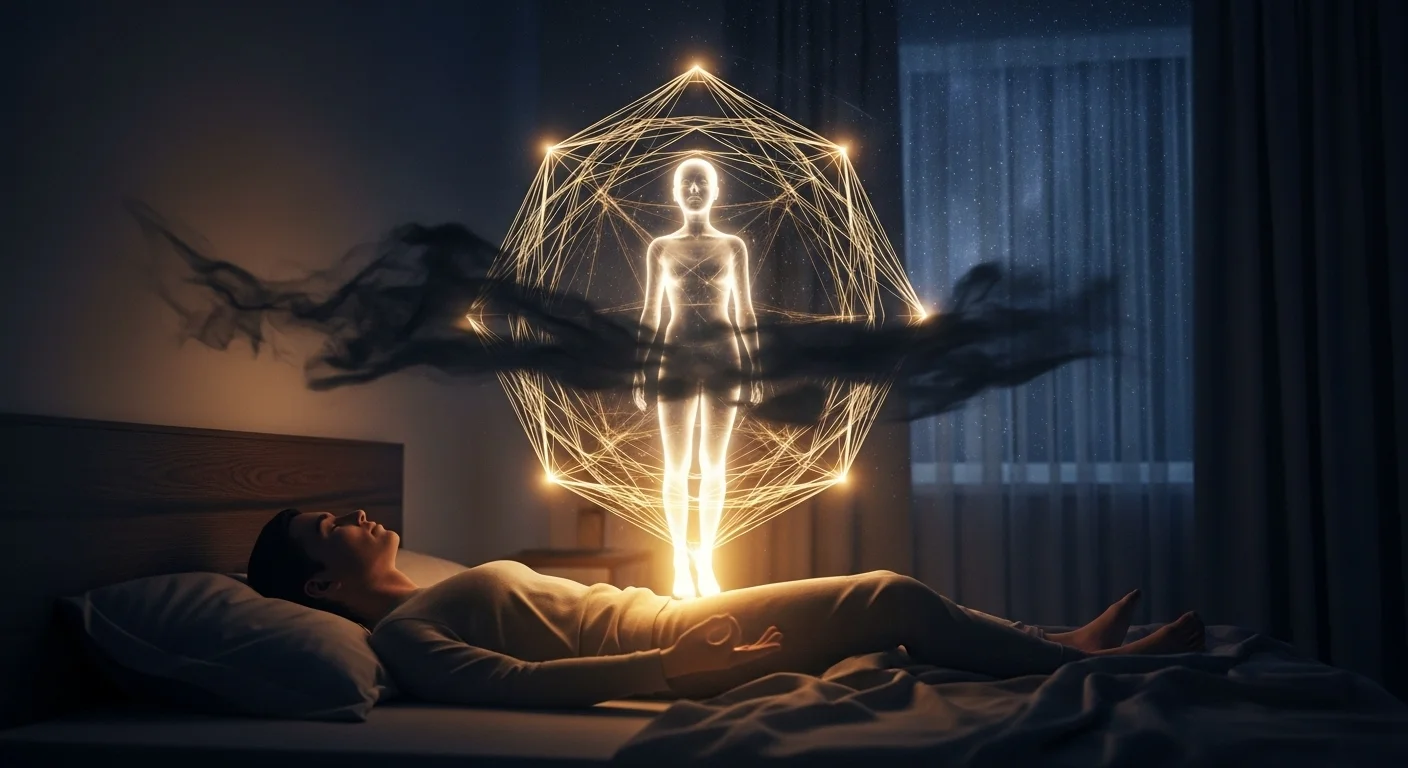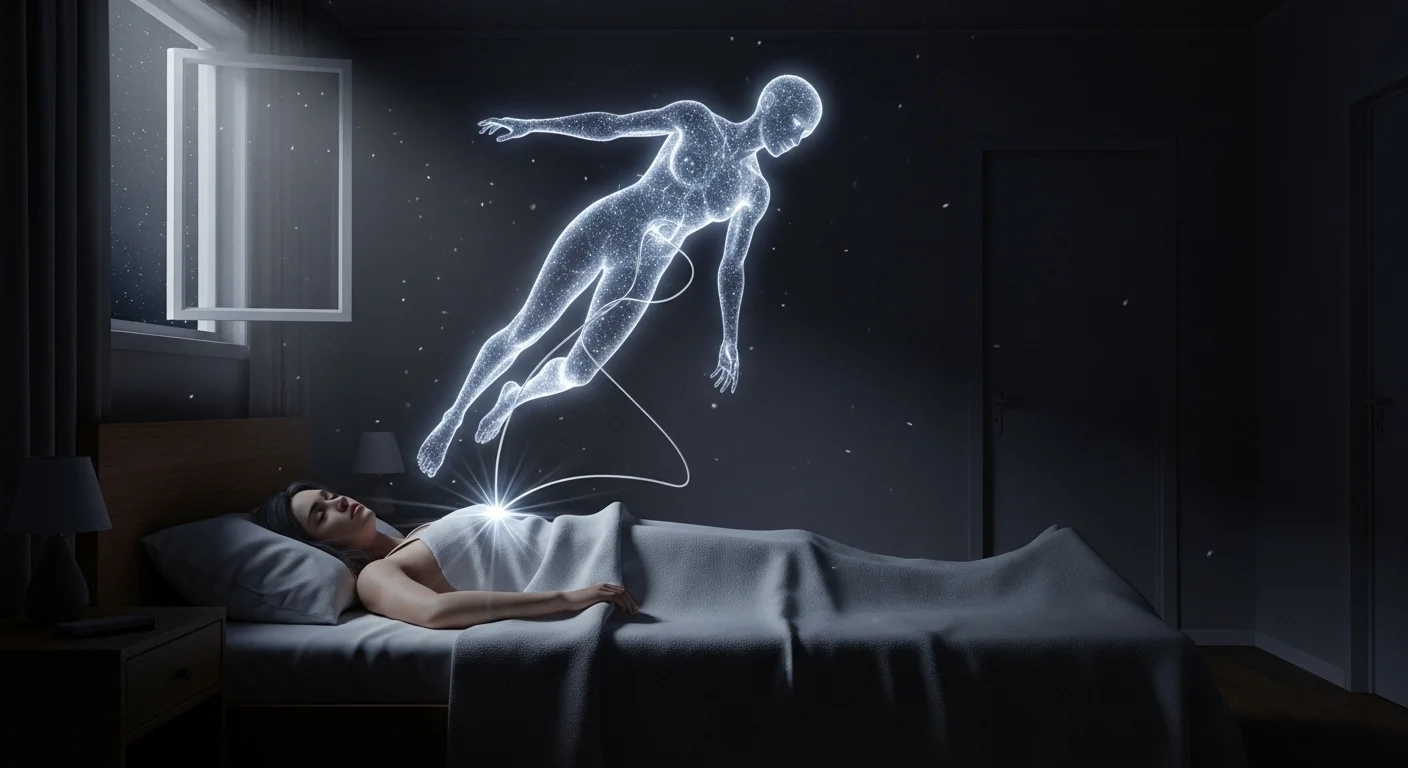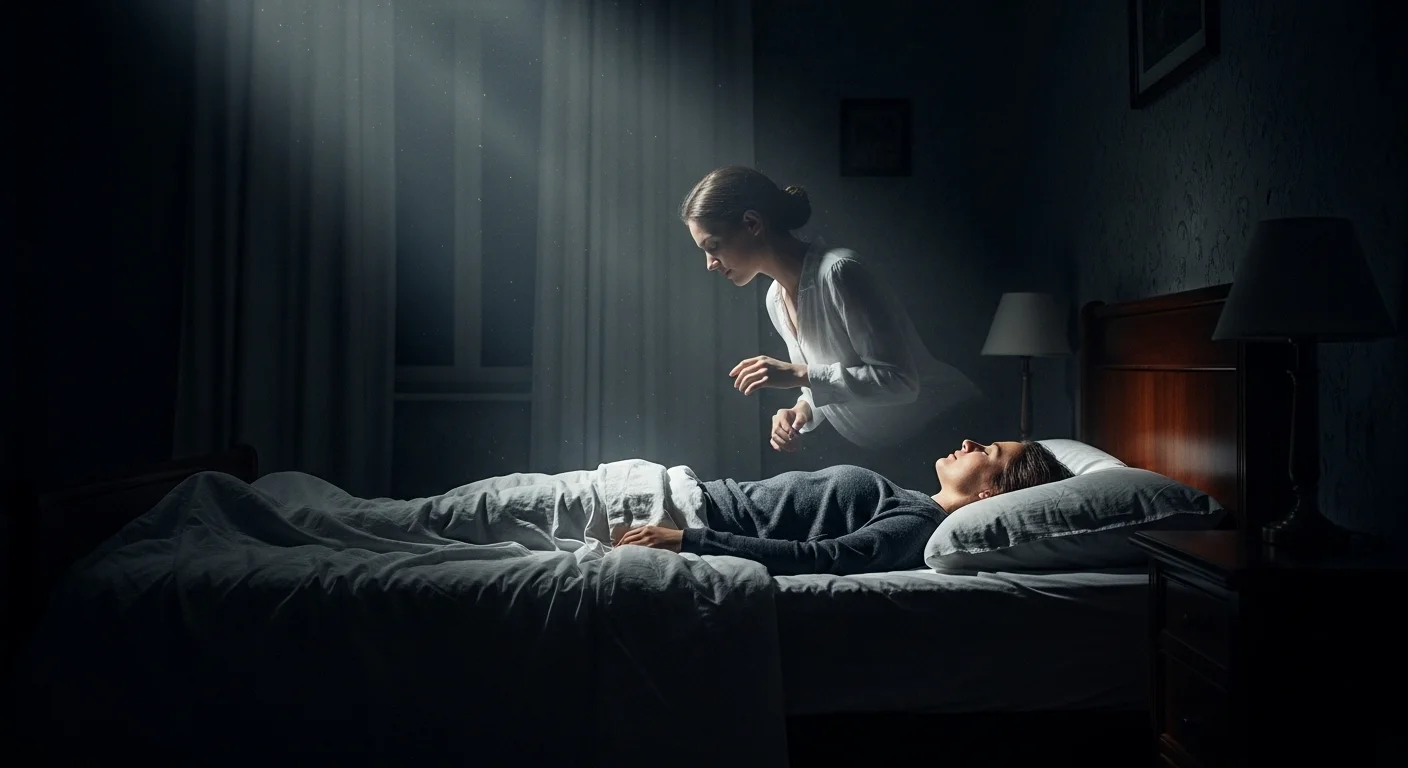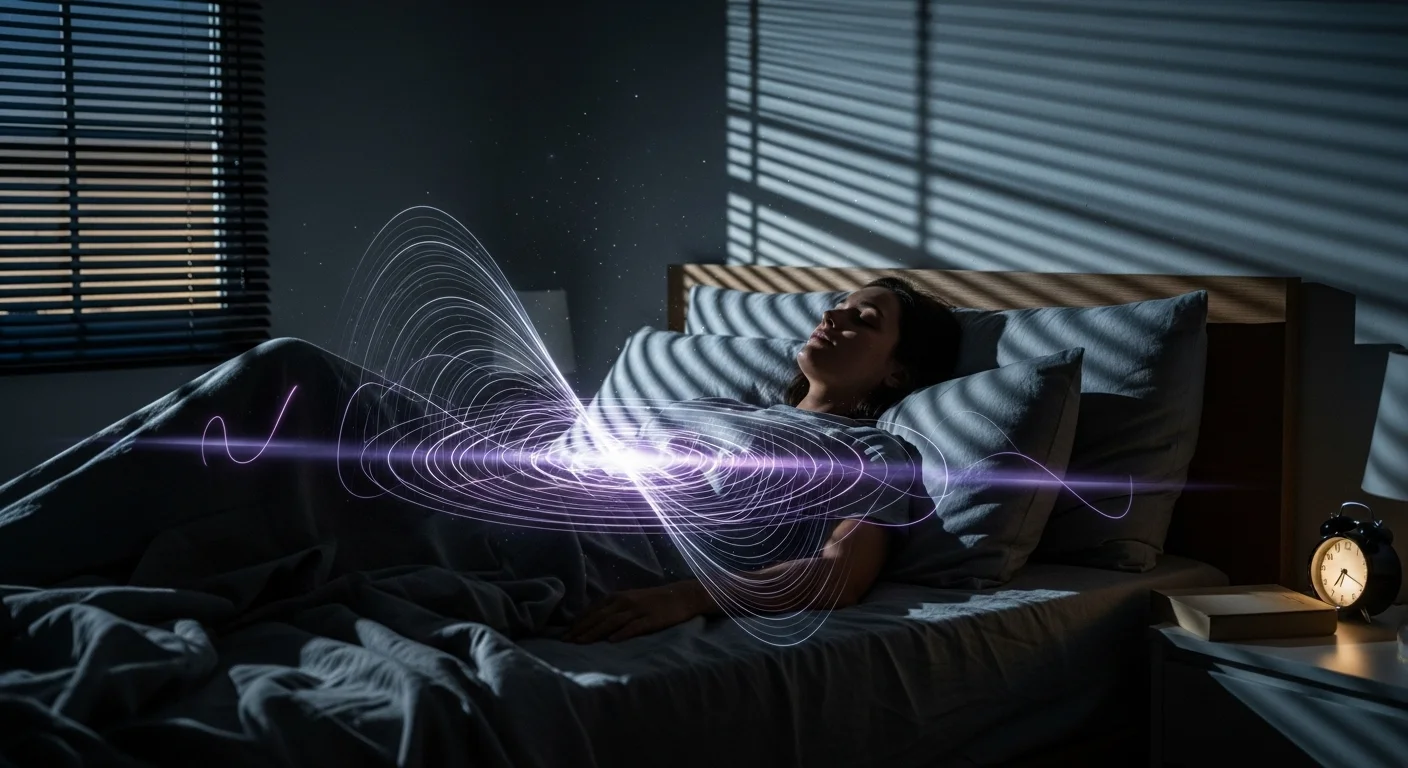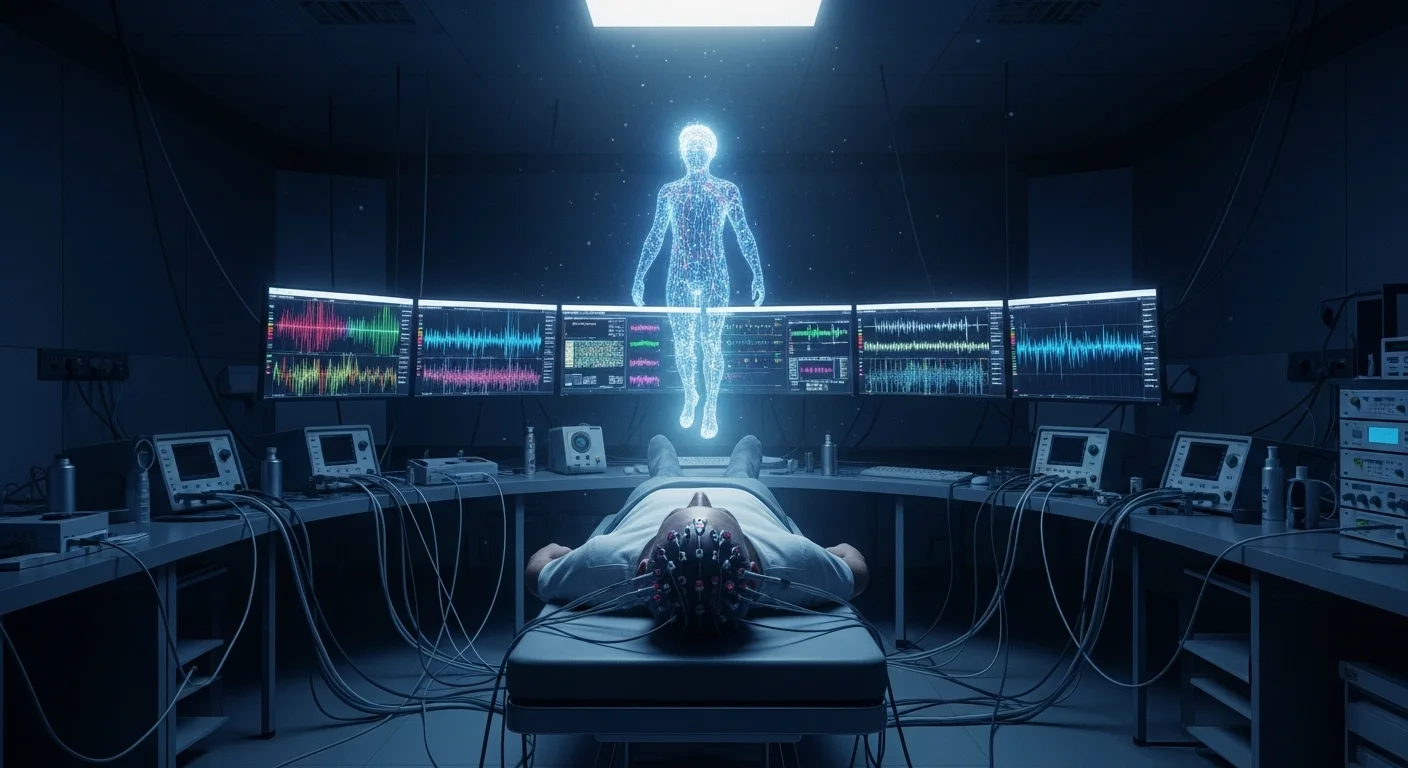
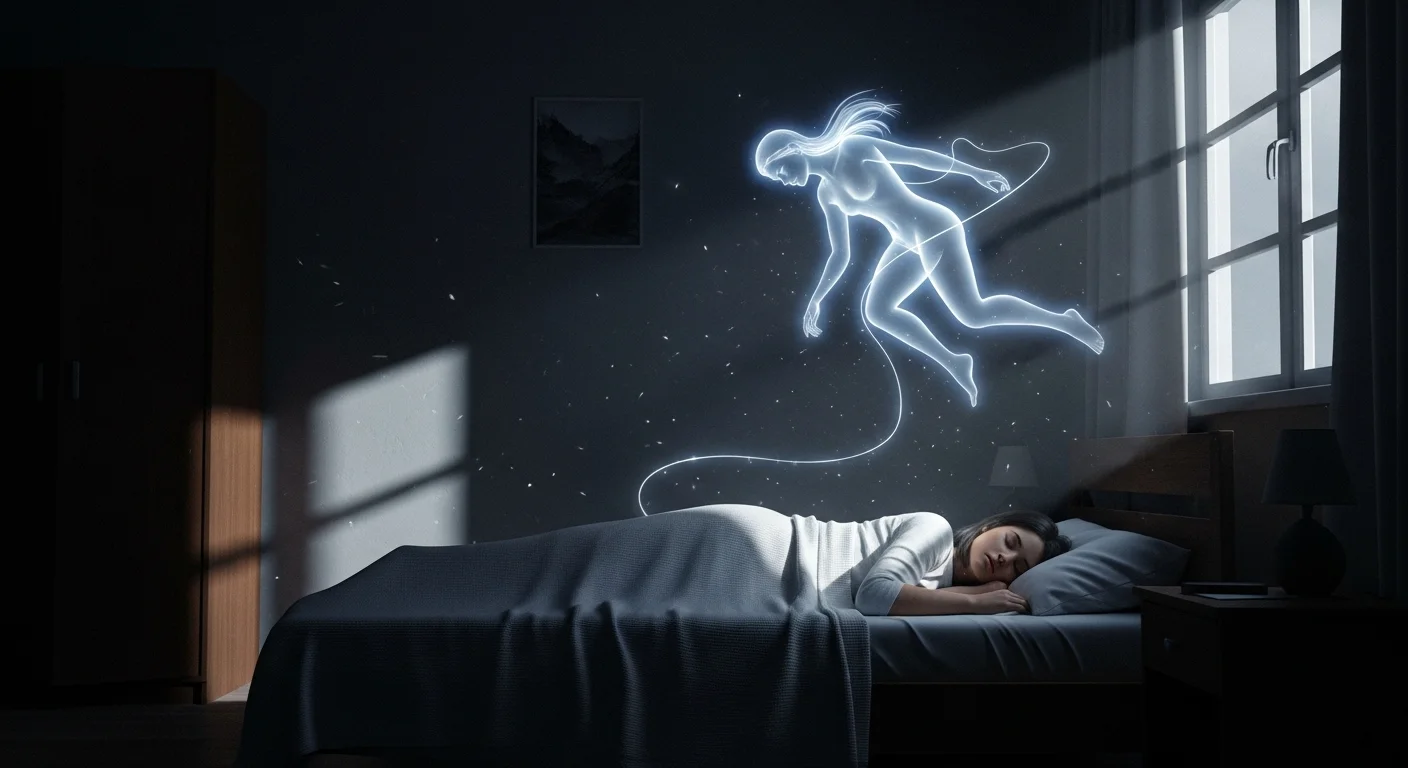
Spontaneous astral projection occurs when an individual’s consciousness separates from the physical body without conscious intention. This phenomenon frequently happens during sleep or states of deep relaxation. It is distinct from voluntary projection because the person does not use specific techniques to initiate the experience. Many reports suggest that sudden stress, illness, or physical exhaustion can trigger this state. The individual often realizes they are projecting only after they view their physical body from an external perspective.
People often report specific physical sensations during the onset of a spontaneous projection. Common symptoms include a feeling of floating, intense vibrations, or a buzzing sound in the ears. Because the event is unplanned, the individual may feel confusion or fear initially. The level of awareness varies significantly during these episodes. Some people maintain full waking consciousness throughout the separation, while others may drift between a dream state and a lucid awareness of their immediate surroundings.
This type of projection is commonly associated with near-death experiences or episodes of sleep paralysis. In a near-death scenario, patients often describe floating above medical staff during a procedure. In sleep paralysis, the mind wakes up while the body remains immobile, which can lead to a separation experience. The return to the physical body usually happens automatically when the person feels fear or attempts to move their physical muscles. No external intervention is required to end it.
Voluntary Astral Projection
Voluntary astral projection occurs when an individual consciously attempts to separate their consciousness from their physical body. This process begins with a deliberate intention to initiate an out-of-body experience. Unlike involuntary projection, the person maintains control over the start and end of the phenomenon. Practitioners often prepare for this state through mental focus and relaxation. The primary characteristic of this type is the active will of the participant to explore the non-physical environment without external triggers.
Various specific methods exist to induce this state systematically. Most techniques require the practitioner to keep the mind alert while the physical body falls asleep. Common practices include deep meditation, rhythmic breathing exercises, and specific visualization tasks. These methods help reduce physical sensation and increase mental awareness. Consistency is usually necessary to achieve results. The goal of these techniques is to reach a specific state where the energy body allows for separation from the physical form.
Individuals engage in voluntary astral projection for exploration and personal observation. Because the experience is deliberate, the projector usually retains a clear memory of the events. They can often choose where to travel or what to observe during the session. This high level of awareness distinguishes the experience from a lucid dream or a sudden hallucination. The practitioner can decide to return to the physical body at any moment effectively ending the projection when they desire.
Astral Projection During Lucid Dreaming
Lucid dreaming occurs when a person becomes aware that they are dreaming while the dream is taking place. This state allows individuals to gain control over the dream narrative and their own actions. Practitioners often use this awareness as a starting point for astral projection. The dreamer shifts their focus from the dream environment to the sensation of separating from the physical body. This method relies on mental clarity during sleep rather than physical relaxation techniques used while awake.
The process begins with stabilizing the lucid dream to ensure the awareness remains steady. Once the dreamer establishes control, they perform specific actions to induce an out-of-body experience. Common techniques include willing oneself to float upwards or visualizing a portal that leads out of the dream construct. As the dream imagery fades, the individual often experiences vibrations or a sensation of movement. This transition moves the consciousness from the internal dream world to the external astral plane.
Distinguishing between a lucid dream and an astral projection requires careful observation of the environment. A lucid dream is a subjective creation of the mind that responds instantly to thoughts and expectations. In contrast, astral projection involves exploring an objective environment that exists independently of the observer. Practitioners report that the astral realm remains stable and does not change based on their willpower. Verification involves observing real-world events or objects that the individual possesses no prior knowledge of.
Near-Death Experiences and Out-of-Body States
A near-death experience is a specific event that occurs when a person is physically close to death. This often happens during medical emergencies like cardiac arrest or severe injury. Patients frequently report the sensation of separating from their physical bodies during the crisis. They describe floating above the scene and observing medical procedures from a specific vantage point. Researchers classify this phenomenon as a spontaneous out-of-body experience. It differs from other types of projection because the individual does not choose to initiate the separation process.
Survivors of these events often report consistent details regarding their time outside the body. Many describe moving through a dark tunnel toward a source of bright light. Some individuals claim they meet deceased family members or spiritual figures during the episode. Another common element is a rapid review of past life events. These perceptions occur even when the brain shows minimal activity. This consistency across different cultures suggests that the phenomenon follows a specific pattern rather than being a random hallucination.
The aftermath of a near-death experience usually involves significant psychological changes for the individual. Most people return with a reduced fear of death and a greater focus on personal purpose. Within the context of astral projection, this state is an involuntary type of projection. The separation happens automatically due to the failure of physical systems. However, the state of consciousness is similar to voluntary astral travel. This connection helps researchers understand how consciousness functions independently from the physical organism.
Sleep Paralysis Induced Projection
Sleep paralysis happens when the mind wakes up during the rapid eye movement stage of sleep. The body remains immobile to prevent movement during dreams. This biological function keeps the sleeper safe. A person in this state feels conscious but cannot move muscles. Practitioners utilize this condition as a tool. The mind is awake while the body rests. This specific combination allows consciousness to separate from the physical form. This state provides a direct route to the astral plane.
Individuals often feel fear during paralysis due to hallucinations or immobility. The method requires the person to remain calm and control fear. Panic causes the body to wake up and ends the state. The practitioner must not fight the paralysis. Focus must remain on moving the energy body. Sensations like vibrations or buzzing sounds often occur. These signals mark the start of the exit. This phase requires concentration and a distinct lack of anxiety to work effectively.
Specific techniques help detach consciousness once the state stabilizes. A common method involves visualizing a rope and pulling the self up. Another technique is the roll-out method. The individual attempts to roll sideways without using physical muscles. Success results in a sensation of floating above the bed. The projector can then observe the sleeping body. This type of projection creates vivid experiences. The separation allows the individual to travel freely while the physical body remains in bed.
Remote Viewing Compared to Astral Projection
Remote viewing and astral projection are distinct practices despite their similarities. Astral projection involves the sensation of the consciousness leaving the physical body to travel in a non-physical plane. The practitioner perceives a complete separation from their physical form. In contrast, remote viewing allows a person to perceive details about a distant target while remaining physically and mentally present in their body. The viewer describes data about a specific location or object without the experience of traveling there.
The methods used to achieve these states differ significantly. Remote viewing follows structured protocols and scientific methodologies developed for gathering intelligence. It is often done in a waking state with pen and paper to record impressions systematically. Astral projection usually requires a deep meditative state, sleep paralysis, or lucid dreaming techniques to induce the out-of-body experience. The focus in astral projection is on exploration and personal interaction within the environment, rather than strictly recording objective data.
The subjective experience of the practitioner provides the clearest distinction between the two phenomena. An astral projection feels like a fully immersive reality where the individual can interact with entities and move through space. It feels just as real as physical waking life. Remote viewing is more passive and fragmented. The viewer receives flashes of visual information, sounds, or feelings about the target. They reconstruct these sensory inputs into a coherent description without feeling embodied at the location.
Your next step
If you already understand what astral projection is and you’re looking for practices that truly work, this e-book presents 35 tested techniques to induce out-of-body experiences. Each technique is explained clearly and directly, allowing you to choose the method that best fits your routine and level of awareness.
This material is ideal for those who want to apply objective and varied methods, speeding up the process of conscious out-of-body projection. It works for both beginners and practitioners who have already had experiences and want to expand their possibilities. This is a practical guide for anyone who wants consistent results.
If you are taking your first steps and want to understand the fundamentals of astral projection with clarity, this manual was created to make your learning easier. In it, you will find clear explanations about the subtle bodies, the stages of projection, the most common sensations, and how to deal with fear and mental blocks.
This e-book is recommended for anyone who needs a solid and safe foundation to start practicing with confidence. It organizes the concepts in a progressive way, helping you understand the process as a whole and develop a consistent and conscious practice.
For those who want more complete and in-depth guidance, the complete astral projection course offers structured lessons, guided practices, visualizations, advanced techniques, and ongoing support. The content was designed to take you from theory to practice with safety and consistency.
This course is suitable for all levels, from beginner to advanced, and provides a systematic approach based on years of research, experience, and proven results. You will learn how to awaken your potential, gain control of your experiences, and integrate spiritual insights into your daily life.