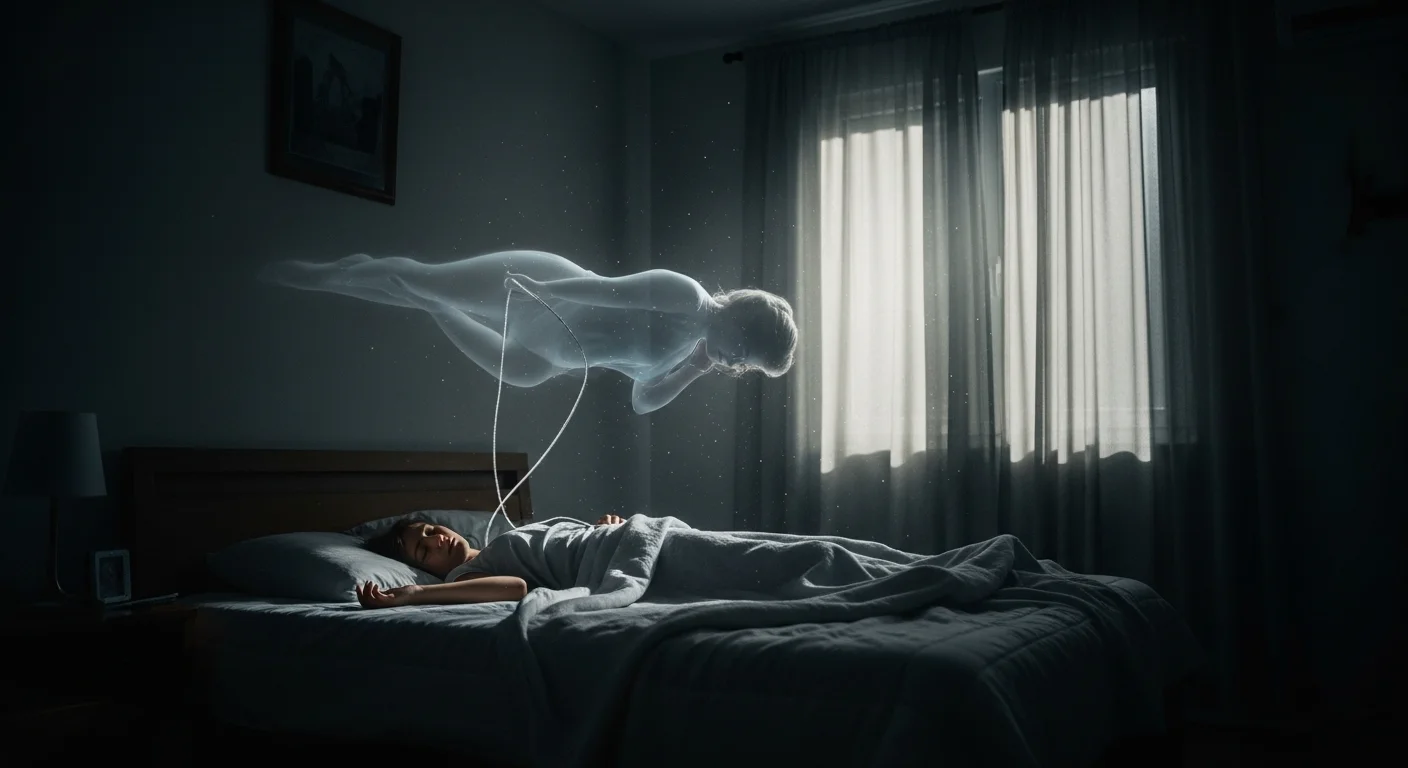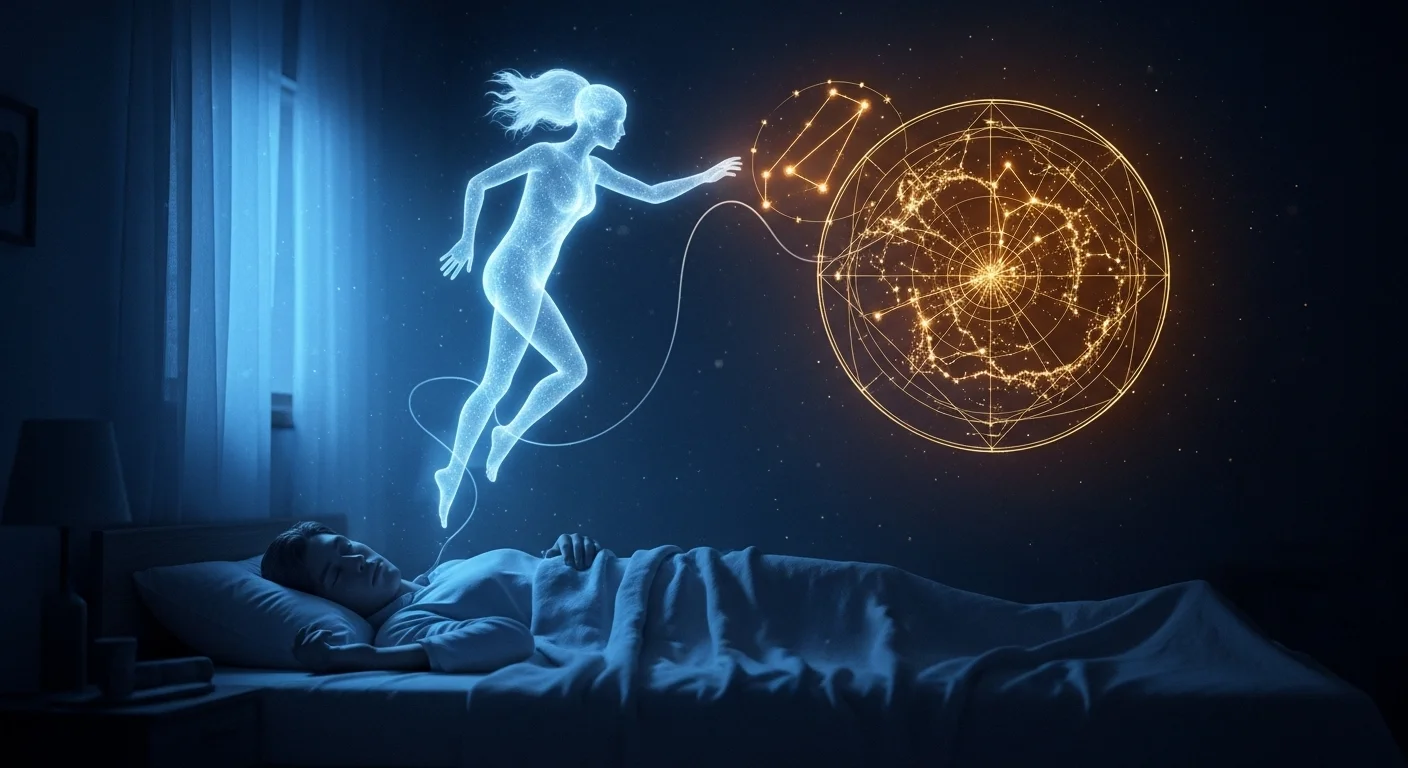

Fear is the primary psychological barrier that stops successful astral projection. When you experience fear during the attempt, your physical body reacts immediately. This emotional response increases your heart rate and creates tension in your muscles. These physical changes signal to the brain that there is a threat to your safety. The mind prioritizes waking consciousness over the deep relaxation required for the experience. This survival mechanism forces your awareness back into the physical body and ends the session.
Most practitioners feel fear because the sensations of separation are unfamiliar. The vibrational state often produces loud internal sounds or intense buzzing feelings. Sleep paralysis causes an inability to move, which leads to panic in beginners. These phenomena are normal parts of the transition but can appear dangerous if you do not expect them. You must understand that these symptoms are harmless. This knowledge helps reduce the anxiety that disrupts the separation process.
You must control your reactions to achieve a successful separation. Preparation involves studying the stages of projection so you know what to expect. When fear arises during practice, you should remain calm and observe the sensations without emotion. Affirmations can help program your mind to stay neutral during the attempt. Regular meditation trains the brain to focus during stress. If you feel panic, stop the technique gently and try again when you are calm.
Moving the Body Breaks the Trance
Physical stillness is a fundamental requirement for achieving astral projection. When you move a muscle during the practice, you send a signal to your nervous system. This tells the brain that the physical body is active. This action immediately disrupts the deep relaxation necessary for the separation process. The mind pulls its focus back to physical sensations, and the trance state dissolves. You must train your body to remain completely motionless to avoid triggering this wakefulness response.
Practitioners often experience specific urges to move, such as a sudden itch or the need to swallow. These sensations are mechanisms the brain uses to check if the body is asleep. If you react to these urges by scratching or shifting, you confirm that you are awake. This resets your progress, and you must start the relaxation process again. You should learn to ignore these minor irritations until they fade away naturally without any physical intervention.
You can prevent the need to move by finding a highly comfortable position before you begin. Ensure your clothing is loose and the room temperature is pleasant so you are not distracted. Once you settle into your position, commit to remaining there for the entire session. Mental discipline is essential to overcome the reflex to adjust your posture. By maintaining absolute physical stillness, you allow your body to fall asleep while your mind remains fully conscious.
Lack of Deep Physical Relaxation
Many practitioners fail to project because their physical bodies are not fully relaxed. Tension in the muscles sends signals to the brain that the body is still active and awake. This state prevents the mind from shifting focus away from physical sensations. You must reach a state where you can no longer feel your body to separate your consciousness effectively. Without this deep level of relaxation, the projection reflex will not trigger, and you will remain stuck in the physical body.
A common error involves rushing through the relaxation phase of the practice. Beginners often attempt to exit the body after only a few minutes of breathing exercises. This time is usually insufficient to silence the physical senses completely. You might feel calm, but deep muscular tension often remains unnoticed in areas like the jaw, neck, and shoulders. This residual tension acts as an anchor that keeps your awareness locked to the physical reality and blocks the vibrational state.
To correct this mistake, you should dedicate more time specifically to progressive muscle relaxation techniques. Start at your feet and consciously tense and release every muscle group moving upward to your head. Do not attempt any projection techniques until your body feels heavy or numb. This process may take twenty to forty minutes of continuous focus. Ensuring the body is completely asleep while the mind remains awake is the most critical step for a successful astral projection experience.
Practicing When Too Tired
Many practitioners attempt astral projection techniques at night right before going to sleep. This is often a mistake because physical exhaustion works against the process. Astral projection requires a delicate balance where the body relaxes completely but the mind remains alert and focused. If you practice when you are physically exhausted, your brain will prioritize deep sleep to recover energy. You will likely lose consciousness within minutes and fail to maintain the awareness necessary to exit the body.
Successful projection depends on reaching the hypnagogic state, which is the border between wakefulness and sleep. When you are too tired, you skip this transitional phase and drop directly into unconsciousness. This rapid transition prevents you from controlling your vibrational state or separation techniques. Your focus must remain sharp to navigate the separation process. Fatigue dulls your mental faculties and concentration, making it nearly impossible to execute the mental commands required for a successful projection.
You should schedule your practice sessions for times when your mind is rested. The most effective method is the Wake Back to Bed technique. You sleep for six hours, wake up for a short period, and then attempt projection. Alternatively, you can practice during afternoon naps or immediately after waking up in the morning. These times ensure your body is relaxed enough to sleep, but your mind has enough rest to maintain the necessary level of alertness.
Inconsistent Practice Routine
Astral projection is a skill that requires regular mental conditioning to master effectively. When you practice sporadically, your mind cannot establish the necessary neural pathways for the experience. Many beginners fail because they try techniques for a few days and then stop for weeks. This lack of continuity prevents the subconscious mind from recognizing your intention to project. You must view this practice as a daily discipline rather than a random experiment to achieve actual results.
An irregular schedule often leads to significant frustration and a distinct lack of progress. Each time you take a long break between sessions, you effectively reset your training to the beginning. The mental focus and relaxation states required for projection diminish without constant reinforcement. This cycle of starting and stopping makes the process much harder than it needs to be. You waste time relearning basic relaxation steps instead of advancing toward the vibrational state or separation.
To correct this mistake, you must establish a strict and predictable schedule for your attempts. Choose a specific time of day or night to practice your techniques and stick to it. Even short daily sessions are more effective than long sessions done once a week. You should commit to this routine for at least thirty days to see changes. Regularity trains your brain to enter the correct state of consciousness quickly and increases your success rate.
Too Much Mental Effort and Anxiety
Many practitioners fail because they use too much intellectual force during the process. They analyze every small sensation in their body to check for progress. This constant mental activity keeps the brain too alert and awake. You cannot enter the necessary deep trance state if your mind focuses on processing data. The physical body must fall asleep while the mind remains passively aware. Active thinking prevents the brain from shifting into the slower frequencies required for separation.
Anxiety acts as a major physical barrier that stops astral projection. Strong emotions release stimulating chemicals like adrenaline into the bloodstream. This chemical reaction increases your heart rate and creates tension in your muscles. Your body interprets this physical stress as a signal to stay awake. You might feel excitement about potential success or fear of the unknown. Both feelings disrupt the deep relaxation needed for the practice. You must remain neutral to allow the process to continue.
The correct approach involves a passive state of mental observation. You should monitor the process without trying to control every specific aspect. If you detect a vibration or sound, simply acknowledge it without reacting. You should observe these sensations without intense focus or analysis. This lack of active engagement allows the physical body to fall asleep effectively. You must surrender the need for an immediate result. A detached mindset creates the ideal conditions for the astral body to separate.
Your next step
If you already understand what astral projection is and you’re looking for practices that truly work, this e-book presents 35 tested techniques to induce out-of-body experiences. Each technique is explained clearly and directly, allowing you to choose the method that best fits your routine and level of awareness.
This material is ideal for those who want to apply objective and varied methods, speeding up the process of conscious out-of-body projection. It works for both beginners and practitioners who have already had experiences and want to expand their possibilities. This is a practical guide for anyone who wants consistent results.
If you are taking your first steps and want to understand the fundamentals of astral projection with clarity, this manual was created to make your learning easier. In it, you will find clear explanations about the subtle bodies, the stages of projection, the most common sensations, and how to deal with fear and mental blocks.
This e-book is recommended for anyone who needs a solid and safe foundation to start practicing with confidence. It organizes the concepts in a progressive way, helping you understand the process as a whole and develop a consistent and conscious practice.
For those who want more complete and in-depth guidance, the complete astral projection course offers structured lessons, guided practices, visualizations, advanced techniques, and ongoing support. The content was designed to take you from theory to practice with safety and consistency.
This course is suitable for all levels, from beginner to advanced, and provides a systematic approach based on years of research, experience, and proven results. You will learn how to awaken your potential, gain control of your experiences, and integrate spiritual insights into your daily life.