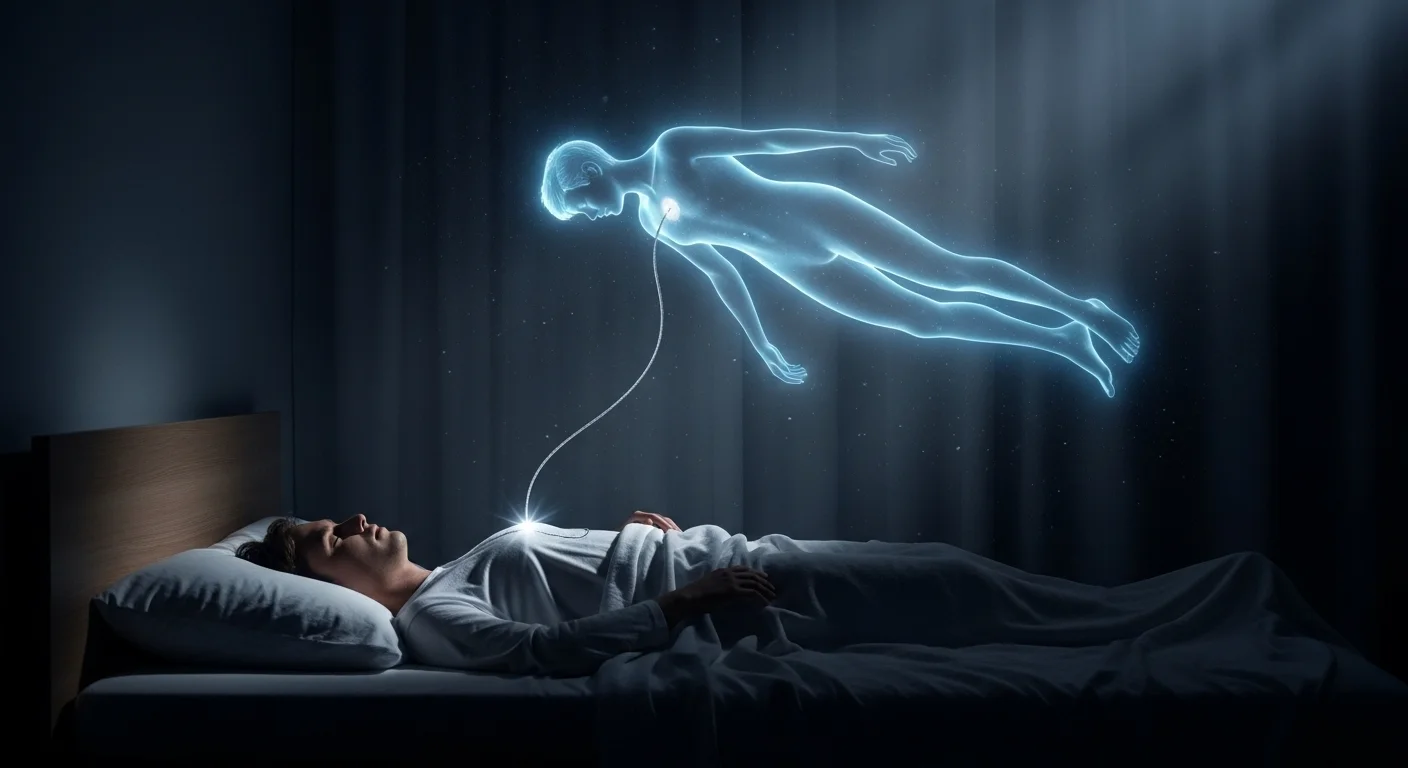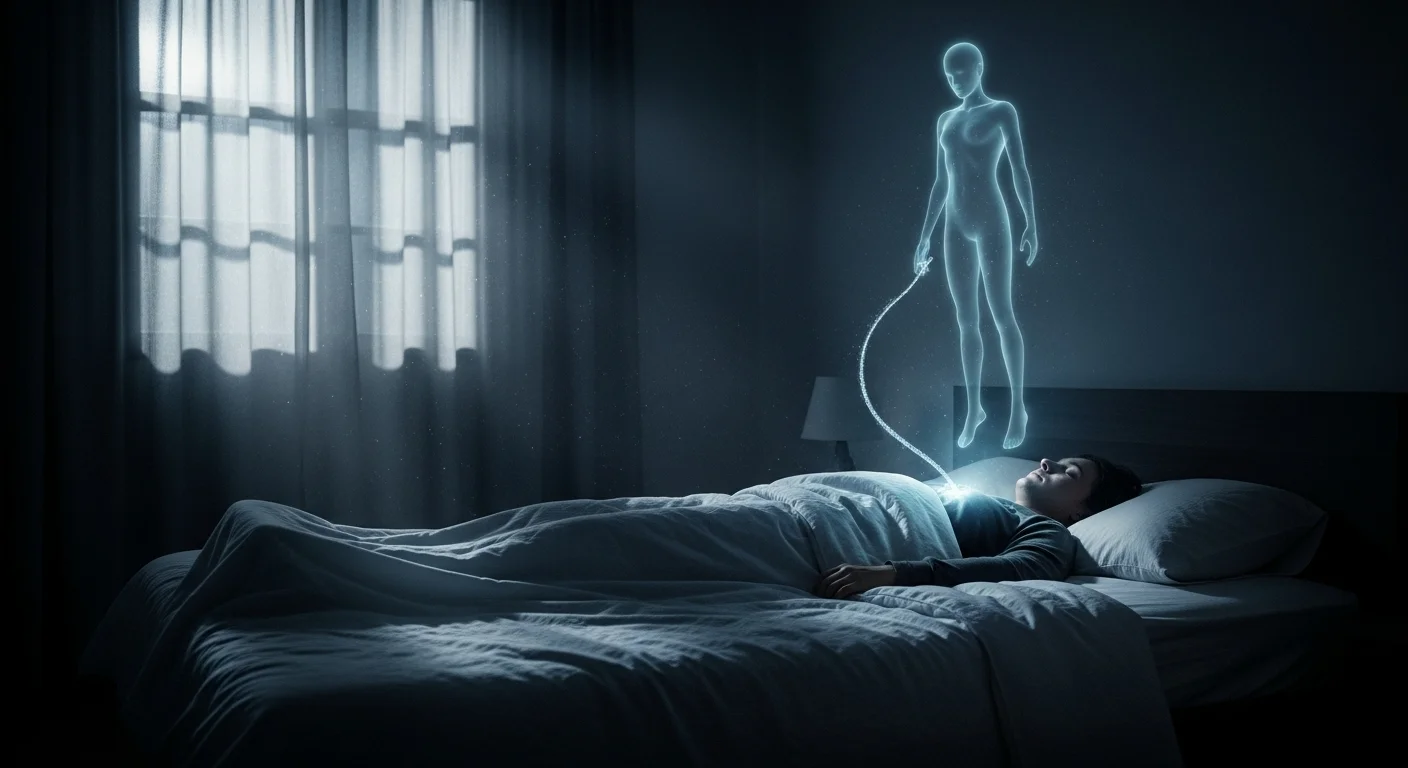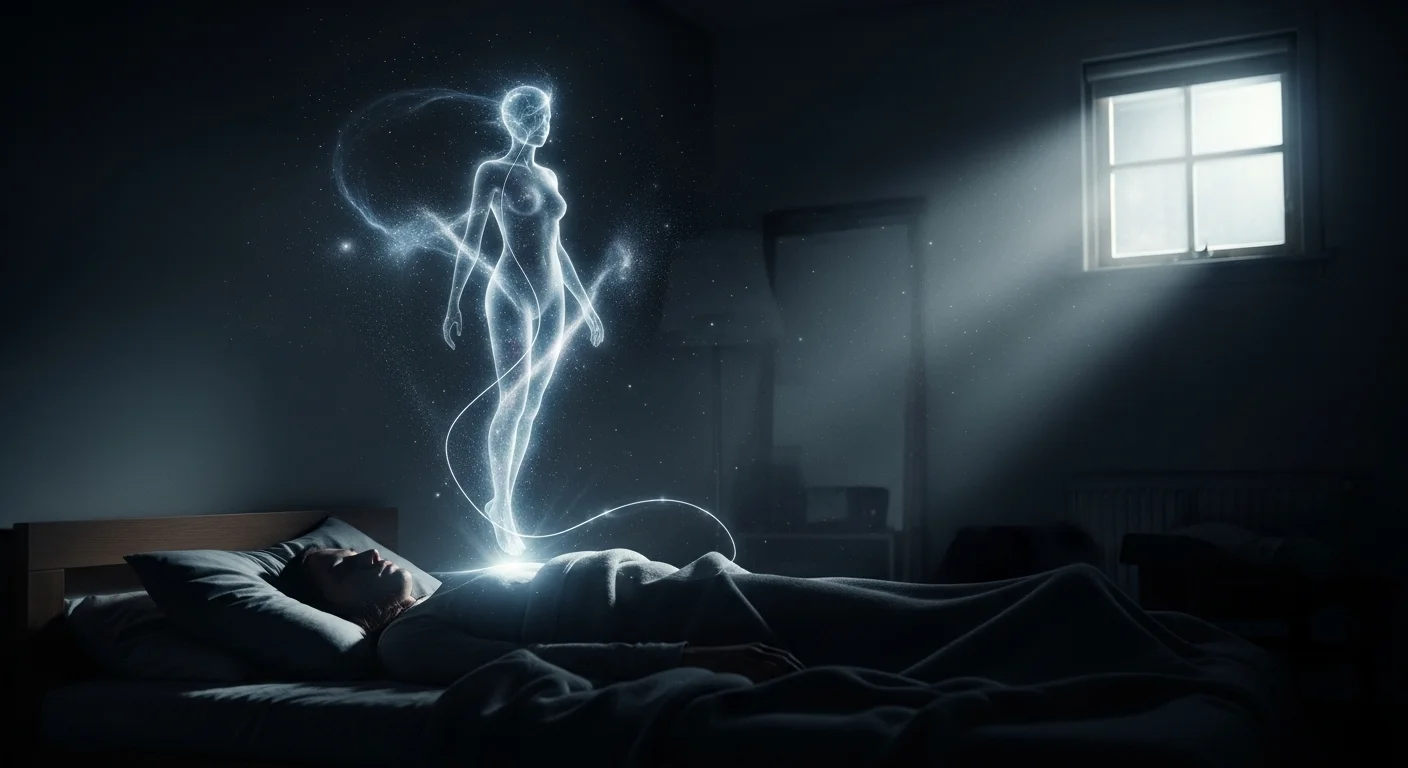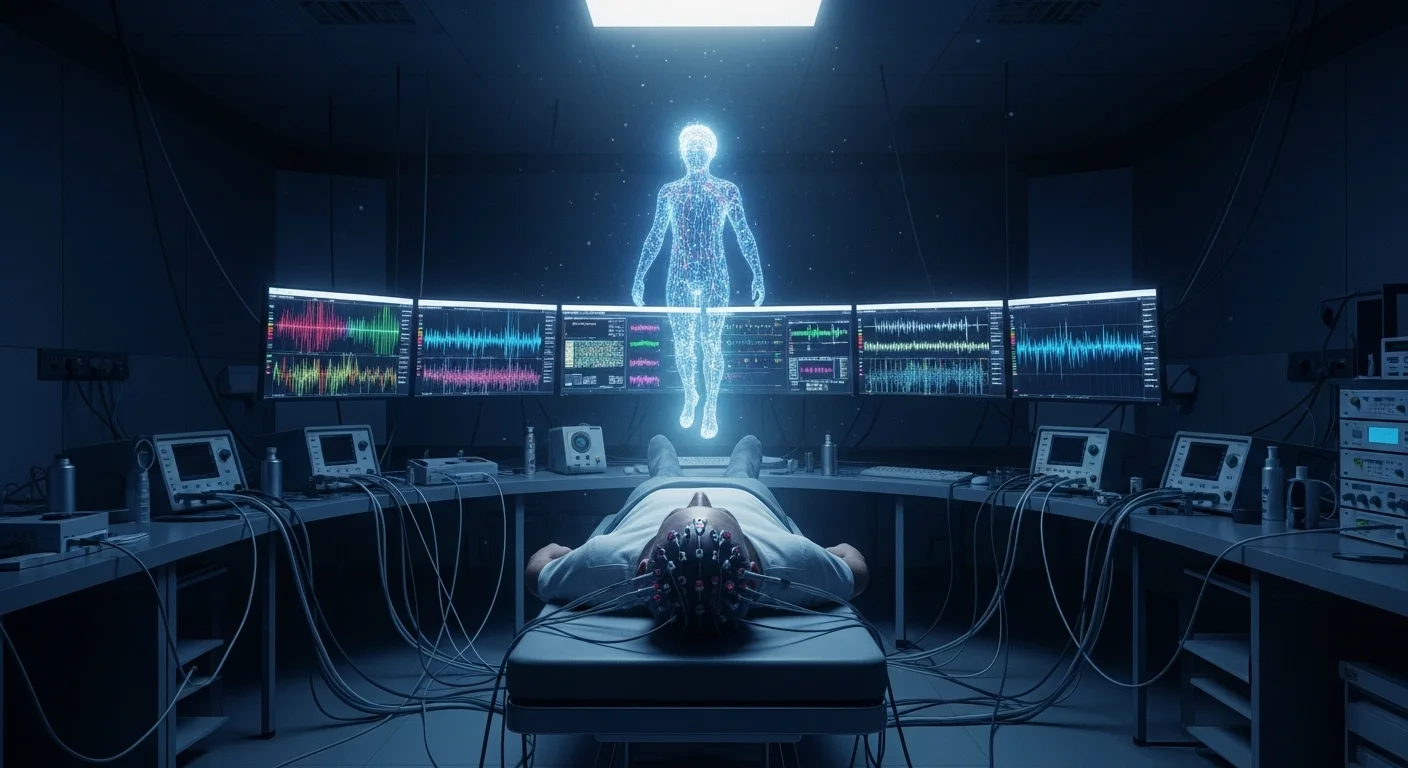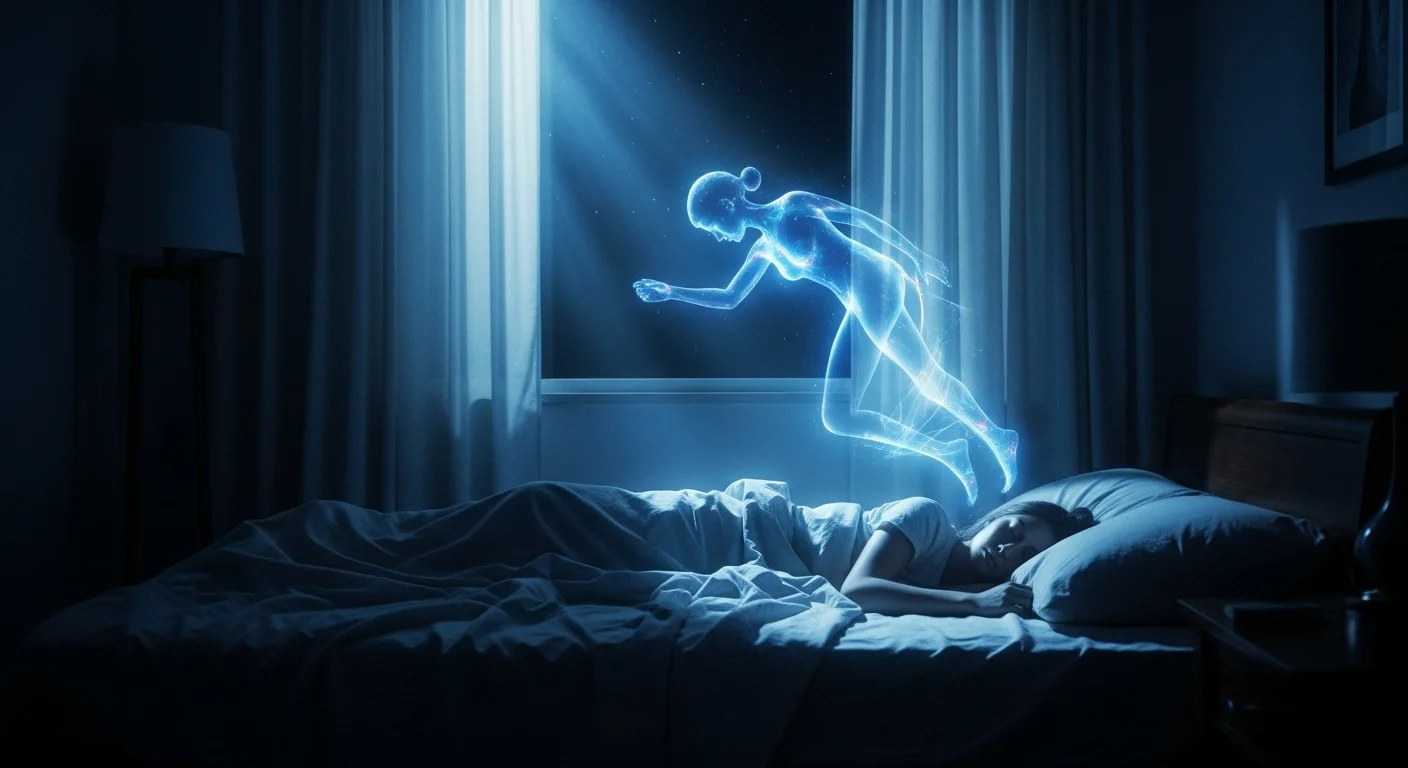
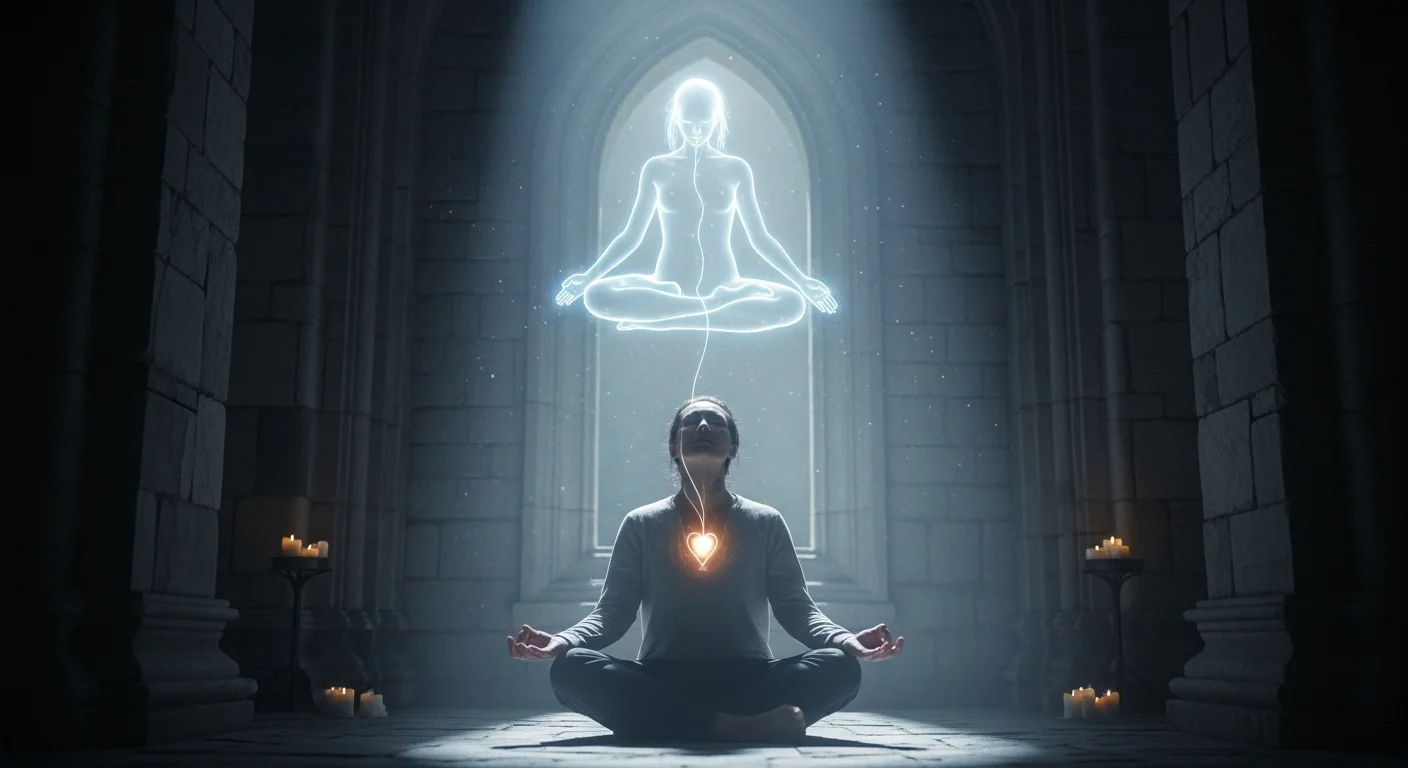
An out-of-body sensation occurs when a person perceives the world from a location outside their physical body. This experience often involves seeing one’s own body from an elevated perspective. The individual remains awake and conscious during the event. Researchers classify this as a form of autoscopy or a dissociative hallucination. The brain processes sensory inputs incorrectly during these moments. This creates a convincing feeling of separation between the self and the physical form. It is a distinct neurological event.
People report specific physical symptoms before the separation occurs. Common signs include vibrations, high-pitched ringing sounds, or a temporary inability to move. The vestibular system, which controls balance, plays a central role in this process. When this system conflicts with visual data, the brain attempts to resolve the error. This neurological confusion allows the mind to construct a new spatial orientation. The result is the distinct feeling of floating or drifting away from the actual physical position.
These sensations frequently happen during states of deep relaxation or near-sleep. During deep meditation, the body reduces sensory input from the external environment. The brain begins to generate internal imagery to compensate for the lack of external data. This shift causes a disruption in the mental map of the body. The parietal lobe fails to integrate tactile and visual information accurately. Consequently, the awareness shifts to a projected location within the immediate surroundings rather than the body.
Changes in Brain Activity During Deep Meditation
Deep meditation causes measurable shifts in electrical brain patterns. When a person is active and alert, the brain produces beta waves. As meditation begins, these signals slow down significantly. The brain shifts into alpha waves, which indicate a state of relaxation. In deeper states, theta waves become dominant. These slower frequencies are associated with reduced external sensory processing. This reduction in sensory input helps create the mental environment necessary for altered states of consciousness.
Neurological studies show specific changes in the parietal lobe during deep meditative states. This region of the brain processes spatial information and physical orientation. It helps an individual define the boundaries between their body and the external world. During intense meditation, activity in this area decreases noticeably. When the parietal lobe receives less information, the brain loses its distinct sense of physical limits. This biological mechanism often leads to a feeling of expanding beyond the body.
Activity also changes in the prefrontal cortex and the thalamus. The prefrontal cortex is responsible for attention and planning. During meditation, this area becomes highly active as the individual focuses on a specific object or mantra. Simultaneously, the thalamus stops relaying sensory data to other parts of the brain. This combination creates a unique state of hyper-focus with no incoming distractions. The brain remains alert but disconnects from physical sensations, which facilitates distinct out-of-body experiences.
The Role of Sensory Deprivation in Altered States
Sensory deprivation occurs when an individual intentionally reduces or removes external stimuli. This process involves limiting inputs such as light, sound, and physical touch. The human brain is designed to process constant signals from the surrounding environment. When these external signals cease, the brain begins to search for internal stimulation. This shift in focus causes significant changes in neural activity. Deep meditation achieves a similar effect by directing attention inward and effectively blocking out common distractions.
Without a steady stream of external data, the brain creates its own sensory reality to compensate for the lack of input. Researchers often observe this phenomenon in isolation tanks or extremely quiet rooms. Individuals report seeing visual patterns or hearing sounds that do not exist. In deep meditation, this process leads to changes in body perception. The sense of physical position becomes unreliable without external confirmation. This loss of reference points facilitates the sensation of separation from the physical body.
Reduced sensory input weakens the mental boundary between the self and the environment. The parietal lobe is the brain region responsible for orienting the body in space. During deep meditation, activity in this specific area decreases significantly. This reduction creates a subjective sense of boundlessness. The brain can no longer distinguish clearly between the physical body and the surrounding space. Consequently, the practitioner feels an expansion beyond physical limits, which manifests as an out-of-body sensation.
Disruption of the Body Schema and Proprioception
The brain constructs a mental model of the physical form to navigate space effectively. This internal map is called the body schema. It depends on proprioception, which provides sensory feedback about the position of muscles and joints. Under normal conditions, the parietal lobe processes this data to define the boundaries of the self. This constant stream of neural information allows an individual to perceive the body as a distinct object separate from the surrounding environment.
Deep meditation significantly reduces the amount of sensory input reaching the brain. This deprivation impacts the posterior superior parietal lobule, which controls spatial orientation. When the flow of proprioceptive signals decreases, the neural systems that maintain physical limits become less active. The brain no longer receives the necessary data to differentiate between the body and external space. Consequently, the strict neurological definition of the body schema begins to dissolve due to this lack of sensory confirmation.
The interruption of spatial processing causes distinct shifts in physical perception. Because the brain lacks current data on body position, it may interpret the self as occupying a larger volume or floating. The awareness seems to detach from the physical structure when the internal map is temporarily suspended. These experiences are physiological responses to the absence of sensory input. This mechanism explains why practitioners report out-of-body sensations when the biological system for proprioception is quieted.
Scientific Explanations for Out-of-Body Experiences
Researchers suggest that out-of-body experiences originate from specific neurological functions within the brain. Studies identify the temporoparietal junction as a central area for these sensations. This region processes sensory information from the body, including touch and balance. It integrates this data to create a coherent sense of where the body is located in space. If this brain region fails to integrate signals correctly, the brain may create a false sensation of separating from the physical body.
Another scientific factor involves the vestibular system, which controls balance and spatial orientation. During deep meditation or sensory deprivation, the brain receives limited external input. This lack of information can cause a conflict between visual signals and the vestibular sense. The brain attempts to resolve this sensory mismatch by constructing a new perspective. This process can result in the perception of floating or viewing one’s own body from an external point outside the physical self.
Scientists also link these experiences to distinct states of consciousness near sleep boundaries. These sensations often occur during the transition between wakefulness and sleep, known as the hypnagogic state. In this phase, the body relaxes completely while the mind remains alert. This dissociation mimics sleep paralysis where motor functions cease. The brain may interpret this immobility as a separation of the mind from the physical form. This biological mechanism explains why deep relaxation triggers such phenomena.
Managing Physical Sensations During Meditation Practice
When you meditate deeply, your body often experiences distinct physical changes. You might feel heavy, light, or numb in certain areas of your limbs. It is important to remain calm when these events occur. Do not try to stop these feelings or move your body to fix them. Instead, you should simply observe the sensation without judging it as good or bad. Keep your focus on your breath. This allows your body to relax while your mind remains alert.
Sometimes these physical sensations become very intense during the session. You may feel vibrations, strong tingling, or a sense of expansion. If these feelings cause fear or discomfort, you can gently return your attention to the physical weight of your body. Focus on the actual contact between your body and the chair or floor. This specific technique helps to stabilize you in the present moment. You can also take several deep breaths to reduce the intensity of the experience.
Consistent practice makes it easier to handle these physiological shifts over time. As you learn to tolerate these sensory changes, they will no longer distract you from your meditation. This acceptance creates a stable environment for your mind to focus. You will eventually notice that the sensations pass on their own or become less noticeable. Managing these physical distractions is a necessary step to reach deeper states of consciousness. It allows you to explore your perception safely.
Your next step
If you already understand what astral projection is and you’re looking for practices that truly work, this e-book presents 35 tested techniques to induce out-of-body experiences. Each technique is explained clearly and directly, allowing you to choose the method that best fits your routine and level of awareness.
This material is ideal for those who want to apply objective and varied methods, speeding up the process of conscious out-of-body projection. It works for both beginners and practitioners who have already had experiences and want to expand their possibilities. This is a practical guide for anyone who wants consistent results.
If you are taking your first steps and want to understand the fundamentals of astral projection with clarity, this manual was created to make your learning easier. In it, you will find clear explanations about the subtle bodies, the stages of projection, the most common sensations, and how to deal with fear and mental blocks.
This e-book is recommended for anyone who needs a solid and safe foundation to start practicing with confidence. It organizes the concepts in a progressive way, helping you understand the process as a whole and develop a consistent and conscious practice.
For those who want more complete and in-depth guidance, the complete astral projection course offers structured lessons, guided practices, visualizations, advanced techniques, and ongoing support. The content was designed to take you from theory to practice with safety and consistency.
This course is suitable for all levels, from beginner to advanced, and provides a systematic approach based on years of research, experience, and proven results. You will learn how to awaken your potential, gain control of your experiences, and integrate spiritual insights into your daily life.